Summer Courses
Saint Louis University offers several upper-division field biology courses at Reis Biological Field Station each summer.
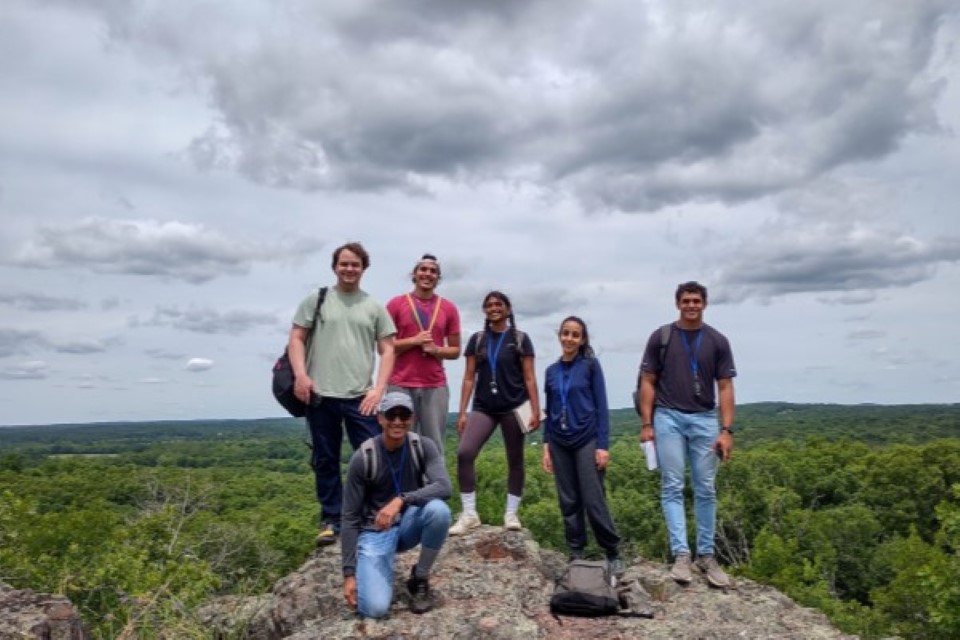
BIOL 4330: Spring Flora of the Ozarks
Course description: Spring Flora is a field-based course designed to acquaint students with the spring flora of the Ozark Highlands Physiographic Province. Students will learn to recognize common plant families found in Missouri and to identify plant species using taxonomic keys.
Instructor: Marcela Mora, Ph.D.
Credit Hours: 4
Session: May 17, 2026 to June 6, 2026
Cost: Approximately $3,200 for tuition and $500 for food.
All buildings have AC.
Transportation to and from the field station is provided.
Contact Robert Wood for registration (robert.wood@slu.edu)
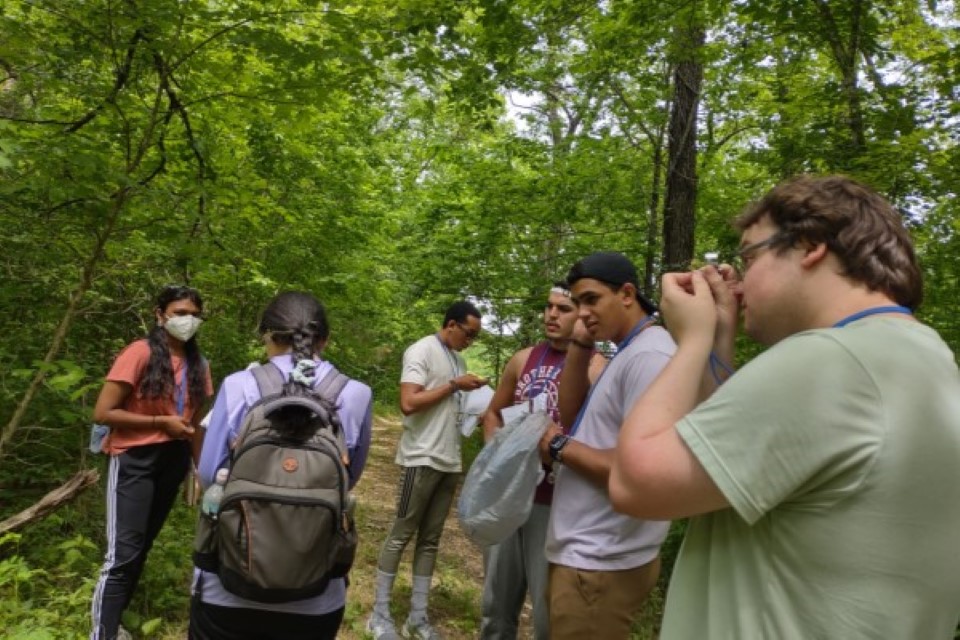
BIOL 3070-01: General Ecology Lecture/BIOL 4760-01:General Ecology Lab
Course description: Three-week course. Experience the beautiful Ozarks while also gaining firsthand experience with research. Students must enroll in both the lab (BIOL4760-01) and the lecture (BIOL 3070-01) to be enrolled
Credit hours: BIOL 3070-01: 3 credit hours; BIOL 4760-01: 1 credit hour
Session: May 17, 2026 to June 6, 2026
E-mail Alice Tipton (alice.tipton@slu.edu) or Robert Wood (robert.wood@slu.edu) with any questions.
Learning Conditions
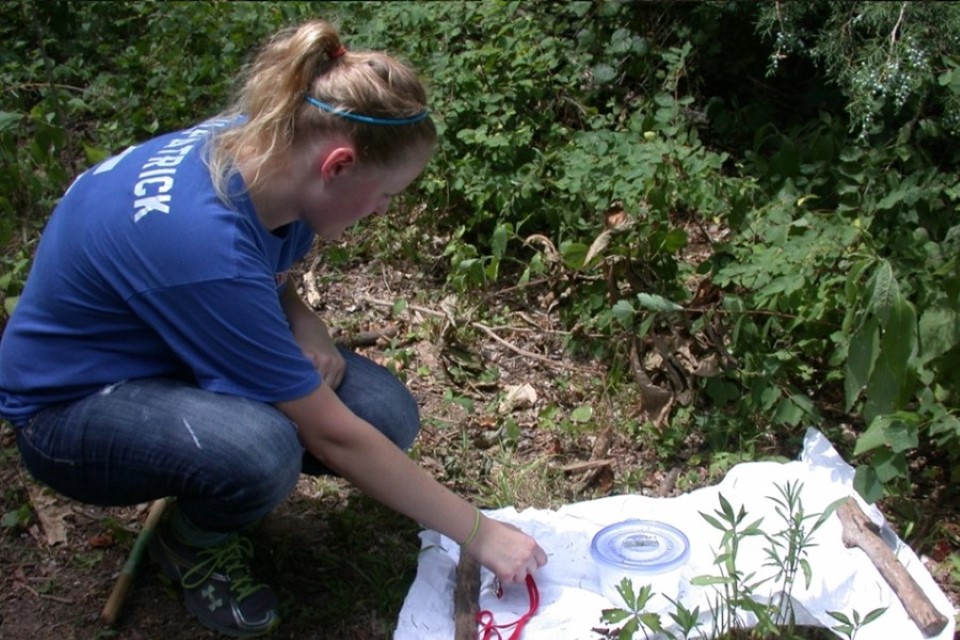
Please note that field courses include major outdoor components to take advantage of the unparalleled opportunities for learning about organisms in their natural environment.
Expect to spend a considerable portion of class time hiking, canoeing, sampling, wading, etc., in potentially hot, humid weather. Classes are not canceled for rain.
You will likely encounter wildlife such as mosquitoes and other insects, ticks, snakes and frogs, as well as poison ivy and stinging nettles. We will ensure that you learn to recognize these organisms so that you can avoid or deal with them appropriately.
If you have any questions about the courses or concerns about whether a field course is appropriate for you, contact the field station director, Robert Wood, Ph.D., or the course instructors.
FAQ About Summer Session Courses
The only prerequisite for all field courses is BIOL 1060: Principles of Biology II. Students who have completed freshman biology are encouraged to apply.
The summer session at Reis Biological Station will run Monday through Saturday for three weeks. In 2024, this will be from May 19 to June 8. If you sign up for a course at the field station, you should expect to leave the station no earlier than 1 p.m. Unless there is an emergency, requests to leave early will not be considered.
Students stay in single-sex cabins that are heated and air-conditioned. Cabins have wooden bunks with foam mattresses; students should bring their own pillow, linens (sheets, mattress pad) or sleeping bag and towels.
Students in the cabins use men's and women's indoor shower houses with three flush toilets, three sinks and three showers. Students provide their own personal toiletries (soap, shampoo, etc.).
A loft above the main lodge also sleeps up to 10 students. Two bathrooms are available in the lodge: one with a sink and toilet, the second with a sink, toilet and shower.
A small coin laundry has two washers ($0.50) and two dryers ($0.25); laundry soap is provided.
We provide three meals each day. Breakfast includes a hot option (pancakes, French toast, eggs) and various cold cereals. Lunch options may include sandwiches, salads, soups and fruit.
Dinners range from grilled choices such as burgers, chicken and kebabs to pasta, tacos, red beans and rice, and more. A variety of fresh salads is offered at each dinner.
Meatless options are available at every meal.